
Amendment of the Constitution of India
Meaning of Amendment
- It is a formal change in the Constitution through addition, variation or repeal of its provisions.
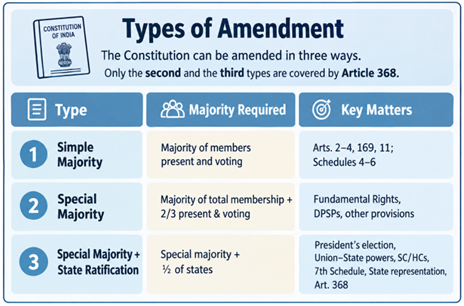
- Article 368 of Part XX gives Parliament the power and procedure to amend the Constitution through Special majority and Special majority with ratification of half of the state legislatures. (There are other provisions mentioned in the constitution that enables the Parliament to amend the Constitution by simple majority, though such provisions are not a part of Article 368.)
- Flexible and Rigid: The Constitution combines flexible and rigid methods of amendment.
- Purpose: Amendments help the Constitution adapt to changing social, political and economic needs.
- 24th Amendment, 1971: Clarified Parliament’s power to amend any part of the Constitution (without altering the Basic Structure of the constitution), including Fundamental Rights, and made Presidential assent mandatory.
- First Amendment: The first Constitutional Amendment was enacted in 1951.
- Latest Amendment: The 106th Amendment Act, 2023 introduced provisions for women’s reservation in legislatures.
Procedure of Amendment under Article 368
- Introduction: An amendment bill can be introduced in either House by a Minister or private member; no prior President’s permission is needed.
- Parliamentary Approval: Passed separately by both Houses with the required majority; no joint sitting.
- State Ratification: For federal provisions, at least half of the states must ratify the Bill.
- President’s Assent: The President must give assent and cannot return or withhold the Bill.
- Amendment: After assent, the Bill becomes an Act, amending the Constitution.
Amendment Procedure Borrowed From
| Source | Feature taken |
| Constitution of South Africa | The procedure for amendment of the Constitution (Article 368) Election of the members of the Rajya Sabha |
- The Constituent Assembly adopted a middle path in the amendment procedure so that the Constitution would be neither as rigid as that of the United States nor as flexible as that of the United Kingdom.
- The system of ratification by the states for the amendments affecting federal provisions follows the federal character of the Indian Union.
MOST IMPORTANT AMENDMENTS
| Amendment | Changes Introduced |
| 1st Amendment Act, 1951 | Addition of Ninth Schedule; Empowerment of the state for special provisions for the advancement of socially and economically backward classes; Insertion of 31A and 31 B |
| 2nd Amendment Act, 1952 | Readjustment of representation in Lok Sabha |
| 7th Amendment Act, 1956 | Abolition and reorganization of states into 14 states and 6 union territories; Extension of jurisdiction of high courts |
| 10th Amendment Act, 1961 | Incorporation of Dadra and Nagar Haveli in the Indian Union |
| 15th Amendment Act, 1963 | Enabled high courts to issue writs outside territorial jurisdiction; Increase in the retirement age of high court judges; appointment of retired judges; compensatory allowance to transferred judges |
| 24th Amendment Act, 1971 | Power of Parliament to amend any part of the Constitution |
| 25th Amendment Act, 1971 | Introduction of new Article 31C; limited the fundamental right to property |
| 26th Amendment Act, 1971 | Recognition granted to Rulers of Indian States to cease and privy purses to be abolished |
| 34th Amendment Act, 1974 | Amendment of the Ninth Schedule to include revised ceiling laws |
| 38th Amendment Act, 1975 | Emergency declared as non-justiciable; empowerment of the president to declare different proclamations of national emergency |
| 42nd Amendment Act, 1976 (Mini Constitution) | Addition of words socialist, secular and integrity in Preamble; Added Fundamental Duties; Extended tenure of Lok Sabha and state legislative assemblies; Established All-India Judicial Service |
| 44th Amendment Act, 1978 | Restoration of powers of the Supreme Court and high courts; made the right to property a legal right |
| 51st Amendment Act, 1984 | Provision of reservation of seats for Scheduled Tribes in certain states |
| 52nd Amendment Act, 1985 (Anti Defection Law) | Disqualification of members of Parliament and state legislatures on ground of defection |
| 61st Amendment Act, 1989 | Reduced voting age from 21 years to 18 years |
| 65th Amendment Act, 1990 | Establishment of National Commission for Scheduled Castes and Scheduled Tribes |
| 69th Amendment Act, 1991 | Made Delhi as ‘National Capital Territory of Delhi’ |
| 73rd Amendment Act, 1992 | Panchayati Raj Institutions included under Eleventh Schedule |
| 74th Amendment Act, 1992 | Gave constitutional status and protection to urban local bodies |
| 76th Amendment Act, 1994 | Included Tamil Nadu Reservation Act of 1994 in Ninth Schedule |
| 77th Amendment Act, 1995 | Provided for reservation in promotions in government jobs for SCs and STs |
| 80th Amendment Act, 2000 | An alternative scheme of devolution of revenue for sharing taxes |
| 85th Amendment Act, 2001 | Provided for “consequential seniority” in the case of promotion for SCs and STs |
| 86th Amendment Act, 2002 | Made elementary education a fundamental right |
| 91st Amendment Act, 2003 | Limited size of Council of Ministers; strengthened anti-defection law |
| 93rd Amendment Act, 2005 | Reservation for backward classes in private unaided educational institutions |
| 97th Amendment Act, 2012 | Gave constitutional status to co-operative societies |
| 99th Amendment Act, 2014 | Replaced collegium system of appointing judges with National Judicial Appointments Commission (NJAC) |
| 100th Amendment Act, 2015 | Gave effect to acquiring of territories by India and transfer of certain territories to Bangladesh |
| 101st Amendment Act, 2016 | Introduction of Goods and Service Tax |
| 102nd Amendment Act, 2018 | Provided constitutional status to the National Commission for Backward Classes |
| 103rd Amendment Act, 2019 | Empowered the state to make provisions for the advancement of any economically weaker sections (EWS) |
| 104th Amendment Act, 2020 | Extension of deadline for reserved seats for SCs and STs; Removal of reserved seats for Anglo-Indian community |
| 105th Amendment Act, 2021 | restores the power of State Governments and Union Territories to identify the Socially and Educationally Backward Classes (SEBCs). Amended Articles 338B, 342A, and 366 of the Constitution. |
| 106th Amendment Act, 2023 | Reserves one-third of all seats for women in Lok Sabha, State legislative assemblies, and the Legislative Assembly of the National Capital Territory of Delhi, including those reserved for SCs and STs. |
PREVIOUS YEAR QUESTION
1. The eighty-sixth Amendment of the Constitution of India altered a Directive Principle of the Constitution to provide for: [WBCS 2019]
(A) early childhood care and education for all children until they complete the age of six years.
(B) the state to provide free legal aid
(C) encouraging Village panchayats
(D) prohibiting intoxicating drinks and drugs injurious to health
Answer: (A) early childhood care and education for all children until they complete the age of six years.
2. Which of the following Amendments of the Indian Constitution is related to reservation of SC’s and ST’s and representation of Anglo Indians in the Lok Sabha and State Assembly?
[WBCS 2019]
(A) 54th Amendment
(B) 63rd Amendment
(C) 111th Amendment
(D) 79th Amendment
Answer: (D) 79th Amendment
3. Under which amendment of the Indian Constitution the voting age reduced to 18 from 21? [WBCS 2021]
(A) 60th
(B) 62nd
(C) 61st
(D) 63rd
Answer: (C) 61st
4. The 73rd Constitutional Amendment in 1992
- Provided a constitutional guarantee to the formation of Panchayats at the village and other levels
- Added a new part to the Constitution relating to urban local bodies
- Stipulated that all Panchayat member be elected for a five year term in elections supervised by State Election Commission
Which of the statements given above is/are correct? [WBCS 2010]
(A) 1 and 2
(B) 1 and 3
(C) 1 only
(D) 2 only
Answer: (B) 1 and 3
5. By which Amendment of the Indian Constitution were the fundamental duties of citizens inserted? [WBCS 2001]
(A) 40th Amendment
(B) 41st Amendment
(C) 42nd Amendment
(D) 43rd Amendment
Answer: (C) 42nd Amendment
সংবিধান সংশোধন কী
- এটি সংবিধানের বিধানসমূহের সংযোজন, পরিবর্তন বা বাতিলের মাধ্যমে সংবিধানে একটি আনুষ্ঠানিক পরিবর্তন।
- পার্ট 20-এর ৩৬৮ নম্বর অনুচ্ছেদ সংসদকে বিশেষ সংখ্যাগরিষ্ঠতা এবং রাজ্য বিধানসভাগুলির অর্ধেক অংশের অনুমোদনের মাধ্যমে সংবিধান সংশোধন করার ক্ষমতা ও পদ্ধতি প্রদান করে। (সংবিধানে অন্যান্য এমন কিছু বিধানও উল্লেখিত আছে যা সংসদকে সাধারণ সংখ্যাগরিষ্ঠতার মাধ্যমে সংবিধান সংশোধন করার ক্ষমতা দেয়, যদিও এই ধরনের বিধানগুলি ৩৬৮ নম্বর অনুচ্ছেদের অংশ নয়।)
- নমনীয় ও দৃঢ়(Flexible and Rigid): সংবিধানটি সংশোধনের নমনীয় এবং শক্ত—উভয় পদ্ধতিরই সংমিশ্রণ ঘটিয়েছে।
- উদ্দেশ্য (Purpose): পরিবর্তনশীল সামাজিক, রাজনৈতিক ও অর্থনৈতিক চাহিদার সঙ্গে সংবিধানকে সময়োপযোগী করে তুলতে সংশোধন সাহায্য করে।
- ২৪তম সংশোধনী, ১৯৭১ (24th Amendment, 1971): মৌলিক অধিকার সহ সংবিধানের যেকোনো অংশ সংশোধন করার (সংবিধানের মূল কাঠামো পরিবর্তন না করে) সংসদের ক্ষমতা স্পষ্ট করেছে এবং রাষ্ট্রপতির সম্মতি বাধ্যতামূলক করেছে।
- প্রথম সংশোধনী (First Amendment): প্রথম সংবিধান সংশোধনীটি ১৯৫১ সালে পাস হয়েছিল।
- সর্বশেষ সংশোধনী (Latest Amendment): ২০২৩ সালের ১০৬তম সংশোধন আইন আইসভায় মহিলাদের সংরক্ষণের বিধান চালু করেছে।
সংবিধান সংশোধনীর প্রকারভেদ
সংবিধান তিনটি উপায়ে সংশোধিত হতে পারে। শুধুমাত্র দ্বিতীয় এবং তৃতীয় প্রকারগুলি ৩৬৮ নম্বর অনুচ্ছেদের আওতাভুক্ত।
|
প্রকার (Type) |
প্রয়োজনীয় সংখ্যাগরিষ্ঠতা (Majority Required) |
মূল বিষয়সমূহ (Key Matters) |
|
১. সাধারণ সংখ্যাগরিষ্ঠতা (Simple Majority) |
উপস্থিত এবং ভোটদানকারী সদস্যদের সংখ্যাগরিষ্ঠতা |
অনুচ্ছেদ ২–৪, ১৬৯, ১১; তফসিল ৪–৬ |
|
২. বিশেষ সংখ্যাগরিষ্ঠতা (Special Majority) |
মোট সদস্যসংখ্যার সংখ্যাগরিষ্ঠতা + উপস্থিত ও ভোটদানকারীদের ২/৩ অংশ |
মৌলিক অধিকার, ডিপিএসপি (রাষ্ট্র পরিচালনার নির্দেশমূলক নীতি), এবং অন্যান্য বিধান |
|
৩. বিশেষ সংখ্যাগরিষ্ঠতা + রাজ্যগুলির অনুমোদন (Special Majority + State Ratification) |
বিশেষ সংখ্যাগরিষ্ঠতা + অর্ধেক রাজ্য |
রাষ্ট্রপতির নির্বাচন, কেন্দ্র-রাজ্য ক্ষমতা, সুপ্রিম কোর্ট/হাইকোর্ট, ৭ম তফসিল, রাজ্যে প্রতিনিধিত্ব, ৩৬৮ নম্বর অনুচ্ছেদ |
৩৬৮ নম্বর অনুচ্ছেদের অধীনে সংশোধনের পদ্ধতি
- উত্থাপন (Introduction): একজন মন্ত্রী বা বেসরকারি সদস্য দ্বারা যেকোনো হাউসে একটি সংশোধন বিল উত্থাপন করা যেতে পারে; এতে রাষ্ট্রপতির পূর্বানুমতির প্রয়োজন হয় না।
- সংসদীয় অনুমোদন (Parliamentary Approval): প্রয়োজনীয় সংখ্যাগরিষ্ঠতা সহ উভয় হাউস দ্বারা পৃথকভাবে পাস হতে হবে; কোনো যৌথ অধিবেশন হয় না।
- রাজ্যগুলির অনুমোদন (State Ratification): যুক্তরাষ্ট্রীয় বিধানগুলির জন্য, অন্তত অর্ধেক রাজ্যকে বিলটি অনুমোদন করতে হবে।
- রাষ্ট্রপতির সম্মতি (President’s Assent): রাষ্ট্রপতিকে অবশ্যই সম্মতি দিতে হবে এবং তিনি বিলটি ফেরত পাঠাতে বা আটকে রাখতে পারবেন না।
- সংশোধন (Amendment): সম্মতি পাওয়ার পরে, বিলটি একটি আইনে পরিণত হয়, যার মাধ্যমে সংবিধান সংশোধিত হয়।
যে উৎস থেকে সংশোধন পদ্ধতি গৃহীত হয়েছে
|
উৎস (Source) |
গৃহীত বৈশিষ্ট্য (Feature taken) |
|
দক্ষিণ আফ্রিকার সংবিধান (Constitution of South Africa) |
সংবিধান সংশোধনের পদ্ধতি (৩৬৮ নম্বর অনুচ্ছেদ) রাজ্যসভার সদস্যদের নির্বাচন (Election of the members of the Rajya Sabha) |
- সংবিধান যাতে মার্কিন যুক্তরাষ্ট্রের মতো মাত্রাতিরিক্ত দৃঢ় না হয়, আবার যুক্তরাজ্যের মতো অতিরিক্ত নমনীয়ও না হয়—সেই ভারসাম্য বজায় রাখতে গণপরিষদ সংশোধন পদ্ধতিতে একটি মধ্যপন্থা অবলম্বন করেছিল।
- যুক্তরাষ্ট্রীয় বিধানগুলোকে প্রভাবিত করে এমন সংশোধনীগুলোর ক্ষেত্রে রাজ্যগুলির দ্বারা অনুমোদনের ব্যবস্থাটি ভারতীয় ইউনিয়নের যুক্তরাষ্ট্রীয় চরিত্রকে অনুসরণ করে।
সবচেয়ে গুরুত্বপূর্ণ সংশোধনীসমূহ
|
সংশোধন (Amendment) |
আনীত পরিবর্তনসমূহ (Changes Introduced) |
|
১ম সংশোধন আইন, ১৯৫১ (1st Amendment Act, 1951) |
নবম তফসিল সংযোজন; সামাজিক ও অর্থনৈতিকভাবে পিছিয়ে থাকা শ্রেণীর উন্নতির জন্য বিশেষ বিধান তৈরির ক্ষেত্রে রাজ্যকে ক্ষমতা প্রদান; ৩১এ এবং ৩১বি (31A and 31B) অন্তর্ভুক্তি |
|
২য় সংশোধন আইন, ১৯৫২ (2nd Amendment Act, 1952) |
লোকসভায় প্রতিনিধিত্বের পুনর্বিন্যাস |
|
৭ম সংশোধন আইন, ১৯৫৬ (7th Amendment Act, 1956) |
রাজ্যগুলোকে বিলুপ্ত করে ১৪টি রাজ্য এবং ৬টি কেন্দ্রশাসিত অঞ্চলে পুনর্গঠন; হাইকোর্টের এখতিয়ার প্রসারিত করা |
|
১০ম সংশোধন আইন, ১৯৬১ (10th Amendment Act, 1961) |
ভারতীয় ইউনিয়নে দাদরা ও নগর হাভেলির অন্তর্ভুক্তি |
|
১৫তম সংশোধন আইন, ১৯৬৩ (15th Amendment Act, 1963) |
হাইকোর্টগুলোকে তাদের আঞ্চলিক এখতিারের বাইরে রিট জারি করার ক্ষমতা প্রদান; হাইকোর্টের বিচারকদের অবসরের বয়স বৃদ্ধি; অবসরপ্রাপ্ত বিচারকদের নিয়োগ; বদলি হওয়া বিচারকদের ক্ষতিপূরণমূলক ভাতা |
|
২৪তম সংশোধন আইন, ১৯৭১ (24th Amendment Act, 1971) |
সংবিধানের যেকোনো অংশ সংশোধনের সংসদের ক্ষমতা |
|
২৫তম সংশোধন আইন, ১৯৭১ (25th Amendment Act, 1971) |
নতুন ৩১সি (31C) অনুচ্ছেদের প্রবর্তন; সম্পত্তির মৌলিক অধিকার সীমিত করা |
|
২৬তম সংশোধন আইন, ১৯৭১ (26th Amendment Act, 1971) |
ভারতীয় রাজ্যগুলির শাসকদের স্বীকৃতি বাতিল এবং প্রভি পার্স (প্রাক্তন রাজভাতা) বিলুপ্ত করা |
|
৩৪তম সংশোধন আইন, ১৯৭৪ (34th Amendment Act, 1974) |
সংশোধিত সর্বোচ্চ সীমা সংক্রান্ত আইন অন্তর্ভুক্ত করতে নবম তফসিল সংশোধন |
|
৩৮তম সংশোধন আইন, ১৯৭৫ (38th Amendment Act, 1975) |
জরুরি অবস্থাকে বিচারবহির্ভূত (অযাচাইযোগ্য) করা; জাতীয় জরুরি অবস্থার বিভিন্ন ঘোষণা জারি করার জন্য রাষ্ট্রপতিকে ক্ষমতা প্রদান |
|
৪২তম সংশোধন আইন, ১৯৭৬ (মিনি সংবিধান) (42nd Amendment Act, 1976 – Mini Constitution) |
প্রস্তাবনায় সমাজতান্ত্রিক, ধর্মনিরপেক্ষ এবং অখণ্ডতা শব্দগুলির সংযোজন; মৌলিক কর্তব্য সংযোজন; লোকসভা ও রাজ্য বিধানসভাগুলির মেয়াদ বৃদ্ধি; সর্বভারতীয় বিচার বিভাগীয় সেবা প্রতিষ্ঠা |
|
৪৪তম সংশোধন আইন, ১৯৭৮ (44th Amendment Act, 1978) |
সুপ্রিম কোর্ট ও হাইকোর্টের ক্ষমতা পুনরুদ্ধার; সম্পত্তির অধিকারকে আইনি অধিকারে পরিণত করা |
|
৫১তম সংশোধন আইন, ১৯৮৪ (51st Amendment Act, 1984) |
নির্দিষ্ট কিছু রাজ্যে তপশিলি উপজাতিদের জন্য আসন সংরক্ষণের বিধান |
|
৫২তম সংশোধন আইন, ১৯৮৫ (দলত্যাগ বিরোধী আইন) (52nd Amendment Act, 1985 – Anti Defection Law) |
দলত্যাগের ভিত্তিতে সংসদ ও রাজ্য বিধানসভার সদস্যদের অযোগ্য ঘোষণা |
|
৬১তম সংশোধন আইন, ১৯৮৯ (61st Amendment Act, 1989) |
ভোটাধিকারের বয়স ২১ বছর থেকে কমিয়ে ১৮ বছর করা |
|
৬৫তম সংশোধন আইন, ১৯৯০ (65th Amendment Act, 1990) |
তপশিলি জাতি ও তপশিলি উপজাতিদের জন্য জাতীয় কমিশন প্রতিষ্ঠা |
|
৬৯তম সংশোধন আইন, ১৯৯১ (69th Amendment Act, 1991) |
দিল্লিকে ‘জাতীয় রাজধানী অঞ্চল দিল্লি’ হিসেবে স্বীকৃতি প্রদান |
|
৭৩তম সংশোধন আইন, ১৯৯২ (73rd Amendment Act, 1992) |
একাদশ তফসিলের অধীনে পঞ্চায়েত রাজ প্রতিষ্ঠানসমূহ অন্তর্ভুক্ত করা |
|
৭৪তম সংশোধন আইন, ১৯৯২ (74th Amendment Act, 1992) |
শহুরে স্থানীয় স্বায়ত্তশাসনমূলক সংস্থাসমূহকে সাংবিধানিক মর্যাদা ও সুরক্ষা প্রদান |
|
৭৬তম সংশোধন আইন, ১৯৯৪ (76th Amendment Act, 1994) |
নবম তসফিলে ১৯৯৪ সালের তামিলনাড়ু সংরক্ষণ আইন অন্তর্ভুক্ত করা |
|
৭৭তম সংশোধন আইন, ১৯৯৫ (77th Amendment Act, 1995) |
তপশিলি জাতি ও তপশিলি উপজাতিদের জন্য সরকারি চাকরির পদোন্নতিতে সংরক্ষণের বিধান করা |
|
৮০তম সংশোধন আইন, ২০০০ (80th Amendment Act, 2000) |
কর ভাগের জন্য রাজস্ব বণ্টনের একটি বিকল্প স্কিম |
|
৮৫তম সংশোধন আইন, ২০০১ (85th Amendment Act, 2001) |
এসসি এবং এসটি-দের পদোন্নতির ক্ষেত্রে “সংশ্লিষ্ট জ্যেষ্ঠতা” (consequential seniority)-র বিধান প্রদান |
|
৮৬তম সংশোধন আইন, ২০০২ (86th Amendment Act, 2002) |
প্রাথমিক শিক্ষাকে একটি মৌলিক অধিকার হিসেবে প্রতিষ্ঠা করা |
|
৯১তম সংশোধন আইন, ২০০৩ (91st Amendment Act, 2003) |
মন্ত্রিপরিষদের আকার সীমিত করা; দলত্যাগ বিরোধী আইনকে আরও শক্তিশালী করা |
|
৯৩তম সংশোধন আইন, ২০০৫ (93rd Amendment Act, 2005) |
বেসরকারি অনুদানহীন শিক্ষাপ্রতিষ্ঠানগুলোতে পিছিয়ে থাকা শ্রেণীগুলির জন্য সংরক্ষণ |
|
৯৭তম সংশোধন আইন, ২০১২ (97th Amendment Act, 2012) |
সমবায় সমিতিসমূহকে সাংবিধানিক মর্যাদা প্রদান |
|
৯৯তম সংশোধন আইন, ২০১৪ (99th Amendment Act, 2014) |
বিচারক নিয়োগের কলিজিয়াম পদ্ধতির পরিবর্তে জাতীয় বিচার বিভাগীয় নিয়োগ কমিশন (NJAC) চালু করা |
|
১০০তম সংশোধন আইন, ২০১৫ (100th Amendment Act, 2015) |
ভারতের অঞ্চল অর্জন এবং কিছু নির্দিষ্ট অঞ্চল বাংলাদেশকে হস্তান্তরের বিষয়টি কার্যকর করা |
|
১০১তম সংশোধন আইন, ২০১৬ (101st Amendment Act, 2016) |
পণ্য ও পরিষেবা কর (GST)-এর প্রবর্তন |
|
১০২তম সংশোধন আইন, ২০১৮ (102nd Amendment Act, 2018) |
অনগ্রসর শ্রেণীগুলির জন্য জাতীয় কমিশনকে সাংবিধানিক মর্যাদা প্রদান |
|
১০৩তম সংশোধন আইন, ২০১৯ (103rd Amendment Act, 2019) |
যেকোনো অর্থনৈতিকভাবে দুর্বল শ্রেণীর (EWS) উন্নতির জন্য বিধান তৈরির ক্ষমতা রাষ্ট্রকে প্রদান |
|
১০৪তম সংশোধন আইন, ২০২০ (104th Amendment Act, 2020) |
এসসি এবং এসটি-দের জন্য সংরক্ষিত আসনের সময়সীমা বৃদ্ধি; অ্যাংলো-ইন্ডিয়ান সম্প্রদায়ের জন্য সংরক্ষিত আসন অপসারণ |
|
১০৫তম সংশোধন আইন, ২০২১ (105th Amendment Act, 2021) |
সামাজিকভাবে ও শিক্ষাগতভাবে পিছিয়ে থাকা শ্রেণীগুলোকে (SEBC) চিহ্নিত করার জন্য রাজ্য সরকার এবং কেন্দ্রশাসিত অঞ্চলগুলির ক্ষমতা পুনরুদ্ধার করা। সংবিধানের ৩৩৮বি, ৩৪২এ এবং ৩৬৬ অনুচ্ছেদ সংশোধন করা হয়েছে। |
|
১০৬তম সংশোধন আইন, ২০২৩ (106th Amendment Act, 2023) |
লোকসভা, রাজ্য বিধানসভা এবং জাতীয় রাজধানী অঞ্চল দিল্লির বিধানসভায় মহিলাদের জন্য সমস্ত আসনের এক-তৃতীয়াংশ সংরক্ষণ করা, যার মধ্যে এসসি এবং এসটি-দের জন্য সংরক্ষিত আসনগুলিও অন্তর্ভুক্ত রয়েছে। |
বিগত বছরের প্রশ্নাবলি (WBCS PYQs)
- ভারতের সংবিধানের 86 তম সংশোধনী সংবিধানের একটি নির্দেশাত্মক নীতিতে পরিবর্তন এনে কোনটির ব্যবস্থা করে? [WBCS 2019]
(A) ছয় বছর বয়স পূর্ণ না হওয়া পর্যন্ত সমস্ত শিশুর প্রাক–শৈশব যত্ন এবং শিক্ষার ব্যবস্থা
(B) রাজ্যের পক্ষ থেকে বিনামূল্যে আইনি সহায়তা প্রদান
(C) গ্রাম পঞ্চায়েতগুলির উৎসাহ প্রদান
(D) স্বাস্থ্যের পক্ষে ক্ষতিকর মাদকদ্রব্য ও নেশাজাতীয় পানীয় নিষিদ্ধ করা
উত্তর: (A) ছয় বছর বয়স পূর্ণ না হওয়া পর্যন্ত সমস্ত শিশুর প্রাক–শৈশব যত্ন এবং শিক্ষার ব্যবস্থা
2.ভারতীয় সংবিধানের নিচের কোন সংশোধনীটি লোকসভা এবং রাজ্য বিধানসভায় তপশিলি জাতি (SC) ও তপশিলি উপজাতিদের (ST) সংরক্ষণ এবং অ্যাংলো–ইন্ডিয়ানদের প্রতিনিধিত্বের সঙ্গে সম্পর্কিত? [WBCS 2019]
(A) 54তম সংশোধনী
(B) 63তম সংশোধনী
(C) 111তম সংশোধনী
(D) 79তম সংশোধনী
উত্তর: (D) 79তম সংশোধনী
3.ভারতীয় সংবিধানের কোন সংশোধনীর মাধ্যমে ভোটাধিকারের বয়স 21 বছর থেকে কমিয়ে 18 বছর করা হয়েছিল? [WBCS 2021]
(A) 60তম
(B) 62তম
(C) 61তম
(D) 63তম
উত্তর: (C) 61তম
4.1992 সালের 73তম সাংবিধানিক সংশোধনীটি—
- 1. গ্রাম এবং অন্যান্য স্তরে পঞ্চায়েত গঠনে সাংবিধানিক নিশ্চয়তা প্রদান করেছে।
- 2. শহরাঞ্চলীয় স্থানীয় স্বায়ত্তশাসন সংস্থাগুলির সম্পর্কিত সংবিধানের একটি নতুন অংশ সংযোজন করেছে।
- 3. রাজ্য নির্বাচন কমিশনের তত্ত্বাবধানে অনুষ্ঠিত নির্বাচনে সমস্ত পঞ্চায়েত সদস্যের পাঁচ বছরের মেয়াদে নির্বাচিত হওয়া নিশ্চিত করেছে।
ওপরের বিবৃতিগুলির মধ্যে কোনটি/কোনগুলি সঠিক? [WBCS 2010]
(A) 1 এবং 2
(B) 1 এবং 3
(C) শুধুমাত্র 1
(D) শুধুমাত্র 2
উত্তর: (B) 1 এবং 3
- 5. ভারতীয় সংবিধানে নাগরিকদের মৌলিক কর্তব্যগুলি কোন সংশোধনীর মাধ্যমে সংযোজিত হয়েছিল? [WBCS 2001]
(A) 40তম সংশোধনী
(B) 41তম সংশোধনী
(C) 42তম সংশোধনী
(D) 43তম সংশোধনী
উত্তর: (C) 42তম সংশোধনী